
From The Jerusalem Post’s 50 Most Influential Jews of 2017

See the full list here.


#14 Netanyahu’s Right Flanks: Naftali Bennett and Avigdor Liberman

Education Minister Naftali Bennett and Defense Minister Avigdor Liberman, leaders of Bayit Yehudi and Yisrael Beytenu, respectively, are the two most influential cabinet members after Prime Minister Benjamin Netanyahu himself.

Liberman, because of his job, and Bennett, to some extent, because he outflanks Netanyahu from the Right. Both keep Netanyahu in line with the right-wing policies on which the coalition is based. As defense minister in a country dealing with daily threats, Liberman’s influence is apparent. He has a part in the major issues impacting Israel every day. While, for the most part, he’s stayed focused on security since entering the coveted role last year, Yisrael Beytenu has a detailed platform with ideas on social issues and relations with the Arab minority in Israel, and Liberman doesn’t hesitate to let his views known.

His MKs, who are thought to be firmly under his thumb, are often leading signatories on some of the most notorious right-wing legislation in the Knesset. Just about any time Netanyahu does or says something especially right-wing, the Left will say he’s trying to appease Bennett.

Bennett is the education minister, but he wishes he were the defense minister. He says Netanyahu promised him the portfolio before the last election, but reneged on the deal. That doesn’t stop Bennett from speaking out on security issues almost daily. He was especially vocal about changing the way the security cabinet makes decisions, threatening the coalition until Netanyahu agreed to have all security cabinet ministers get regular briefings.

When it comes to settlements, Bennett is uncompromising, and the prime minister knows he can’t concede one inch without him and the rest of Bayit Yehudi making a lot of noise. This year, Amona was evacuated by court order, despite the best efforts of Bennett and his second in Bayit Yehudi, Justice Minister Ayelet Shaked, but the Knesset passed a law that could retroactively legalize thousands of settlement homes. They lost the battle – Amona – but are not done trying to win the war to keep settlements intact for good.


#19 The Likudniks: Gilad Erdan, Yisrael Katz and Miri Regev

No one in the Likud is willing to openly compete with Netanyahu, but there are many contenders for the throne once the Netanyahu era comes to a close. While current Likud minister Gideon Sa’ar leads in the polls on this topic, there are current ministers whose jobs draw a lot of attention and who hope to be the next party leader.

Public Security and Strategic Affairs Minister Gilad Erdan

The police, Erdan’s main area of responsibility, have been at the crux of many major events this year, from the Arab violence at the Temple Mount to questions of whether and how protests can be limited in a democracy in light of the weekly rallies in front of Attorney-General Avichai Mandelblit’s home. Erdan has an extremely high media profile because of his role as Public Security Minister, and over the years has become known as an eloquent, yet fiery, defender of government policies on various television and radio shows. Erdan’s other role as Strategic Affairs Minister has a lower profile. He has focused mostly on combating boycotts of Israel, but quickly learned that it’s something best done behind the scenes. Still, he has made connections with Diaspora Jewry in fighting the fight, which should help him politically in the future.

Transportation and Intelligence Minister Yisrael Katz

Katz has positioned himself as a Likud leadership contender who is mentioned in any post-Netanyahu analysis. He’s been very popular and effective as Transportation Minister, with new highways and interchanges going up regularly, as well as new train stations in the periphery, and the Jerusalem-Tel Aviv express train is expected to be unveiled next year. All of this has given Katz a reputation as a “bulldozer,” an Israeli expression meaning he gets things done. Katz’s intelligence portfolio is not a very public one, but he still makes sure to bring up his idea to create a seaport island off the coast of Gaza regularly in the media and to international visitors.

Culture and Sport Minister Miri Regev

Regev is a bit of a dark-horse candidate for future Likud leader, but no one should underestimate her. Regev is beloved by the Likud grassroots, who find her bluntness endearing and culture-warrior positions empowering. When she took to the Cannes red carpet in a Jerusalem-themed dress right after UNESCO omitted the Jewish connection to the capital from a resolution, the mainstream media may have jeered, but the Right cheered for how she stood up for Israel – and with panache. Theater actors may panic at her shifting culture funds to the periphery and refusing to pay for plays that glorify terrorists, but Likud voters are more likely to say “about time.” What the Attorney-General says, of course, is another matter, since he has blocked Regev’s most controversial proposals more than once.


#37 Speaking Truth to Power: Jake Tapper and Ilana Dayan

For better or for worse, 5777 has been the Year of the Journalist.

US President Donald Trump coined the now-ubiquitous term “Fake News,” which Prime Minister Benjamin Netanyahu gleefully adopted. Both leaders like to blame their troubles on the media, an easy target in the sense that it has very low levels of public trust and approval.

On the other hand, investigative journalism is thriving in both countries, between the Trump administration’s dysfunction and Netanyahu’s corruption cases. CNN’s Jake Tapper and Ilana Dayan of Channel 2’s investigative show Uvda are both prime examples of this trend, speaking truth to power, while facing vitriol that’s rooted at the very top.

Tapper, the chief Washington correspondent and anchor of The Lead with Jake Tapper and State of the Union, has become known for keeping politicians honest, no matter where they are on the political spectrum. He’s a live-on-the-air fact checker, who doesn’t hesitate to tell politicians where they’re being inconsistent or flat-out lying. Last year, he challenged Trump to condemn white supremacists and other overtly racist supporters more than 20 times in one interview, and this year he said Trump’s reaction to neo-Nazis marching in Charlottesville and killing a woman was “un-American.”

Tapper is one of the 10 journalists targeted with the most online antisemitic harassment, according to the Anti-Defamation League. But he doesn’t hesitate to take on people on the other extreme of the political spectrum, like anti-Israel Women’s March organizer Linda Sarsour, who bizarrely called him a member of the “alt-right,” and pointed out that the marauding, violent anarchist collective Antifa has assaulted journalists.

Dayan, known as Israel’s premier investigative journalist, became a prime target of Netanyahu’s barbs in late November, after airing a report on the role his wife Sara plays in his administration. The Prime Minister’s Office sent a tirade against Dayan, saying she has “no professional integrity,” and in an unforgettable television moment, she read it on the air, which took a full six minutes.

Unlike Tapper, Dayan doesn’t have as much success in targeting both political sides. Her show is often criticized for having a left-wing slant. Last year, it aired the first part of an investigation into extreme left-wing organizations, which included a clip of activist Ezra Nawi bragging that he reports collaborators with Israel to the Palestinian Authority – essentially sentencing people to death – but did not air the rest of the investigation, in a move that faced right-wing criticism as giving in to left-wing pressure.
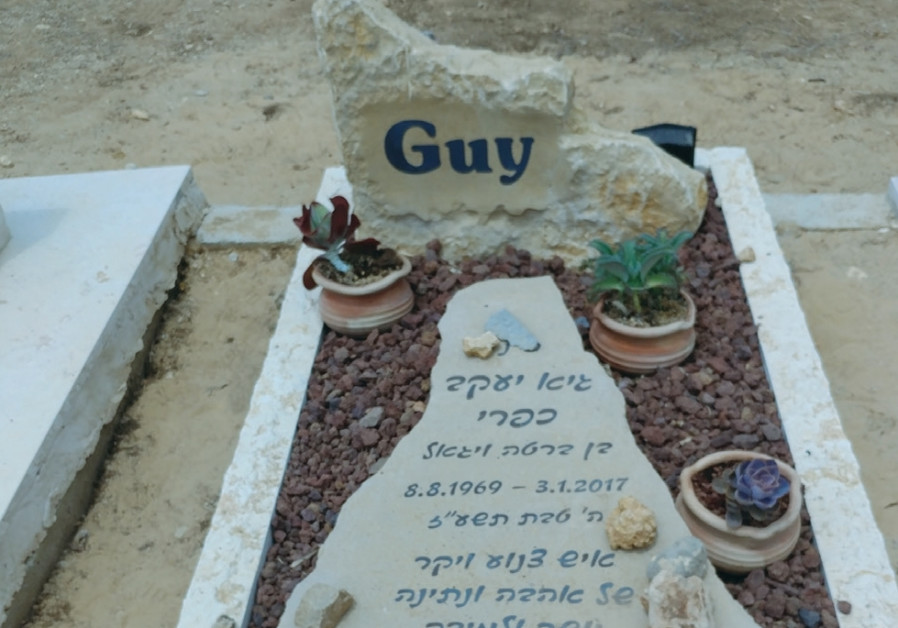

 

Rivlin sends heartfelt letter to ignored bereaved family after ‘Post’ exposé

The state should have dealt more sensitively with the Cafrey family after their son Guy was murdered in a terrorist attack in January, President Reuven Rivlin wrote to the family on Tuesday.

The letter followed a Jerusalem Post report last week on how the Cafrey family was not contacted by any cabinet members – despite a decision made earlier this year that ministers would attend funerals of victims of terrorism – nor were they invited to the President’s Residence in Jerusalem as is the custom. The oversight was likely due to a three-week gag order on the circumstances of the shooting by an Israeli Arab in Haifa, before the Shin Bet (Israel Security) decided it was a terrorist attack and not criminal activity.

“There is no doubt that the event that took Guy’s life was a serious hate crime committed by a despicable murderer who deserves the heaviest punishment,” Rivlin wrote. “There also is not doubt that this painful event should have been handled with greater sensitivity. There is no doubt that you deserve to be treated warmly, respectfully and sincerely in an attempt to ease your pain even slightly.”

Continue reading

The bereaved family that fell between the cracks

One Haifa-based family demands to know why the government is ignoring them in their grief over the death of their son, who was shot at close range by an Israeli Arab.

The bereaved Israeli family that fell between the cracks

Credit: Courtesy

On January 3, 2017, Guy Cafrey, a 48-year-old school bus driver for disabled children, was shot at close-range and murdered by an Israeli Arab in Haifa. He left behind his parents and a sister who, until this week, did not hear from a cabinet minister or from President Reuven Rivlin.

Usually, when a person is killed in a terrorist attack, the cabinet secretary assigns a minister to attend the funeral, and while there is no official procedure, ministers will often pay the family a shiva call. The president invites bereaved families to his official home.

Yet because of the circumstances surrounding Guy’s murder – which are in no way his or his family’s fault – the government has not sent any form of condolences, leaving the family feeling like its bereavement is somehow considered to be less important.

“I feel so totally ashamed,” Guy’s mother, Bertha, said this week. “How can they be like this?”

Continue reading


The scandal-plagued son: Who is Yair Netanyahu?

You’ve probably seen Netanyahu’s name in headlines alongside former Ku Klux Klan leader David Duke’s recently, but who exactly is the prime minister’s son?

The scandal-plagued son: Who is Yair Netanyahu?

After growing up under public scrutiny, and with both parents under criminal investigation, Prime Minister Benjamin Netanyahu’s son, Yair Netanyahu, seems to be cracking under the pressure, taking to Facebook to express his anger.

“He’s just a regular person with opinions, like anyone else, who just happens to be the prime minister’s son,” a longtime friend said Sunday, on condition of anonymity. “People go after him, because they don’t like his dad. I don’t think he would choose this. It’s not easy.”

Whether he seeks it or not, Netanyahu’s political opinions and his colorful way of sharing them have gotten him a lot of attention during August’s slow news cycles. But he didn’t just start making headlines this summer.

The most recent Yair-centered scandal is his outrage-sparking post of what he called “the food chain.” The diagram featured antisemitic tropes such as Jewish billionaire George Soros, who funds left-wing causes and organizations in several countries, controlling the world, via other conspiracy theory figures like lizard people, known as Reptilians, and the Illuminati or Freemasons. Those figures, according to the graphic Netanyahu shared, control former prime minister Ehud Barak, who controls failed Labor candidate Eldad Yaniv and former Prime Minister’s Residence superintendent Meni Naftali, leaders of the weekly anti-Netanyahu protests in Petah Tikva.

The prime minister has thus far declined to comment. Asked about it after he made an unrelated statement to the press on Sunday, he said: “This isn’t a press conference.” At about 9 p.m., Netanyahu Junior deleted the post from his Facebook page with no explanation.

Continue reading

Justice or caution? The pros and cons of MKs on the Temple Mount

Freedom of religion is perhaps the most compelling individual rights-based argument for allowing MKs back on the Mount. Then, there’s security.

Today, just about anyone can visit the Temple Mount, though only Muslims are allowed to pray at Judaism’s holiest site.

But there’s one group of 120 people who are barred from the Mount: members of Knesset.

In October 2015, Prime Minister Benjamin Netanyahu instructed police to keep them away from the site, and the order has remained in effect ever since.

Lawmakers are expected to be allowed on the Temple Mount next week for a one-day trial. It’s unclear if this will mark the end of the ban, since there have been quite a few unfulfilled commitments to let MKs visit the site.

The average Israeli might shrug this off and wonder why MKs, who are supposed to be representing them and not just themselves, are making such a big deal about this. But whether one is for or against lawmakers visiting the Temple Mount, there are much broader implications relating to democracy, rule of law, and security.

Continue reading

Netanyahu, Reagan strategist Finkelstein dies at 72

Finkelstein was a “rock star” in Israel. “Every Israeli knew who he was.”

Political strategist Arthur Finkelstein, who worked for the Likud in several elections, as well as US Republican presidential candidates, died of lung cancer Friday at age 72.

He is survived by his husband, whom he married in 2005, and their two daughters.

A Jewish American born in New York in 1945, Finkelstein came to prominence in the 1970s, helping turn Ronald Reagan into a nationally known politician in the 1976 Republican primary, and continued to help conservative politicians get elected first in the US, and later internationally. He worked with US presidents Richard Nixon, Reagan and George H.W. Bush, as well as with many Republican congressional and gubernatorial candidates.

Finkelstein was known for developing biting attack ads, a talent he used to help win Prime Minister Benjamin Netanyahu the premiership for the first time in 1996. He is credited with coining the winning slogan “Peres will divide Jerusalem,” referring to then-prime minister Shimon Peres, after analyzing polling data and finding that Israelis would reject a deal with the Palestinians that would require the capital’s division.

Continue reading

What has Israel’s government done for its citizens lately?

Some of the biggest news stories in Israel this year had to do with high-profile cabinet decisions that were never implemented.

The Western Wall compromise never came to fruition, and the government canceled it after being taken to the High Court of Justice over its foot-dragging. The evacuees from Amona are still living in temporary housing, as the construction of new homes for them is delayed.

The demand for housing still far outpaces supply, but decisions that are meant to speed up building, like extending work permits to more foreign and Palestinian construction workers, remain on paper only. It’s enough to make an Israeli wonder whether the government ever does what it says it’s going to do.

Here’s the good news: While the “industry of gloom,” as Prime Minister Benjamin Netanyahu has called the media, may often give a different impression, the government has actually implemented 70% of its decisions since the 2015 election.

Continue reading

Is the government fighting racism against Ethiopian-Israelis?

More than two years after Israelis of Ethiopian descent took to the streets of Tel Aviv to protests discrimination and police brutality, and a year after the Justice Ministry released a report on how to fight racism, good-governance NGO the Citizens Empowerment Center in Israel found most of its recommendations remain unimplemented.

But MK Avraham Neguise of the Likud, chairman of the Knesset Immigration, Absorption and Diaspora Affairs Committee and the only current lawmaker of Ethiopian descent, says the government has made strides that the numbers don’t reflect.

Continue reading

Ehud Barak: Internet troll or comeback wannabe?

There have been endless rumors about Barak jumping back into the fray.

Ehud Barak has held many titles: Prime minister, defense minister, IDF chief of staff, Israel’s most decorated soldier, and, according to his bio on Facebook and Twitter, the “father of three daughters and therefore also a feminist.”

Lately, though, it seems that he’s embraced another role: Internet commentator. Is there more to his social media posts than meets the eye? Considering his impressive CV, Barak would be welcome in just about any TV studio or on the pages of any newspaper in Israel. However, starting in May 2016, he went from someone who rarely posted on social media to regularly sharing his thoughts on issues of the day on Facebook and Twitter, netting hundreds of thousands of views – probably more than he would have in the traditional Israeli media. Continue reading

MK Oren Hazan’s 10 most outrageous moments

If Hazan has managed to get an international name for himself, it’s probably because of that time he took a selfie with the president of the United States.

Likud MK Oren Hazan spent Wednesday morning preparing for an encounter that didn’t happen with a Jordanian lawmaker who challenged him to a fight – and yet that is not the most outrageous thing the scandal-plagued legislator has done since he was elected to the Knesset in 2015.

We rounded up some of the highlights – or are they lowlights? – of Hazan’s public life. Continue reading 

oren hazan donald trump