Reporter’s Notebook: A real-life fairy tale at the Royal Palace in Olso

As a big fan of Disney movies, especially the princesses, I was dazzled by the state dinner in honor of Peres; plus, the palace’s sensitivity to kosher laws was impressive.

OSLO – It may not be politically correct these days to say every little girl wants to be a princess, but I certainly did, and I never really grew out of it.

Since I can’t be a princess when I grow up, I take comfort in the fact that I have a job where I can at least meet one.

So, when the Norwegian Embassy in Israel invited me to cover President Shimon Peres and told me the trip would include a gala at the Royal Palace, I literally squealed with excitement. Continue Reading

20140525-070124-25284511.jpg

20140525-070123-25283979.jpg

(Photos: 1 – GPO, 2 – Lahav Harkov)

Transparency in the legislative process: A series

While the way laws pass is ostensibly transparent and votes in the plenum are open for all to see, many of the steps on the way to a bill’s third and final reading take place behind closed doors, or information on them is inaccessible.

Part one: Nearly every member of Knesset has experienced the following: The MK writes a bill that he or she thinks is necessary and in the public interest, checks with an adviser to make sure there aren’t any major legal issues with the bill and then submits it to the Knesset. Weeks later, it goes to the Ministerial Committee for Legislation and is rejected, with no explanation.

Now the bill is buried, because the panel’s decision becomes the coalition’s official policy, and the MK can’t propose it again for months. Continue reading

Part two: The Knesset committees are where bills are shaped and changed into the form that is brought to the plenum for a final vote, which may be drastically different from their original version.

If someone is following a specific bill on an issue that doesn’t have a high enough profile to necessarily make it into the newspapers every step of the legislative process, he or she may find it difficult, or in some cases impossible, to independently find out who voted for or against the latest version.

Several organizations track the Knesset’s activities on specific issues, sending volunteers to sit in committee meetings and report what happened in them, but even they have trouble finding the exact information. Continue reading

Part three: Election fever is in the air as politicians threaten to pull out of the government over peace talks. Plus, MKs will soon vote for a new president, and some of the candidates have a long political career and many Knesset votes in their pasts.

Concerned citizens who want to look up the voting record of a potential president or candidate for reelection to the next Knesset may be disappointed when they try to find it on the Knesset website.

Those citizens would have to look up each individual bill to find out whether the MK in question voted yea, nay, or abstained. Continue reading

Part four: The Knesset is the perfect setting for a drama. It’s full of power, intrigue and ambition and Tomer Avital, in his 2013 book The Parliament, added murder to the mix.

Avital admitted his Hebrew murder mystery novel was written with an agenda, describing an extreme case of what can happen when there is a lack of transparency in the Knesset, particularly in regards to lobbyists.

Lobbyists have turned into bogeymen for some in the Knesset, always lurking around trying to pressure MKs to vote one way or another – depending on who’s paying the lobbyist that day. Others, however, think MKs need to take responsibility for their own actions and that too much blame is placed on lobbyists. Continue reading

Social Affairs: Bringing ideology to life in Lod

MK Itzik Shmuli, the ‘responsible adult’ of the 2011 housing protests, still lives in a housing project in the underprivileged suburb, where he says encountering Israel’s underclass keeps his passion for social issues alive.

With a salary of over NIS 38,000 a month, a Knesset member – especially a single one with no children – could probably afford to live almost anywhere he or she wants, but a year after his inauguration as a freshman legislator, MK Itzik Shmuli (Labor) is bringing his ideology to life in Lod.

Lod, the mixed Jewish-Arab city only a 17-minute train ride from Tel Aviv, has long had a bad reputation for underprivileged residents and a high crime rate.

That didn’t scare Shmuli away, though. Continue Reading

A tumultuous term comes to a close

Coalition chairman Yariv Levin oversaw the most heterogeneous coalition in recent memory as it passed major, controversial bills, and is ready to move on to new challenges.

Coalition chairman Yariv Levin (Likud Beytenu) spent the last year trying to keep the most heterogeneous coalition in recent memory in line, and is ready to move on. It’s not an easy job trying to whip votes from Economy Minister Naftali Bennett and Justice Minister Tzipi Livni on the same policies, when their political views seem to be polar opposites.

It’s even harder trying to get such a diverse coalition to pass hugely controversial legislation that could have a major impact on Israel’s future, especially three such bills in three days – electoral reform, haredi conscription and referendum on land concessions – but Levin managed. Of course, the fact that the opposition boycotted the votes made life easier. Continue reading

Stepping out of Netanyahu’s shadow – but still enjoying the shade

Deputy Minister Ofir Akunis, a fan of ‘House of Cards,’ seems to have learned how to play both sides from the TV show’s politician antihero.

‘Of course I watch House of Cards. It’s appropriate, don’t you think?” Deputy Minister for Liaison with the Knesset Ofir Akunis said of Netflix’s dark political drama that seems to be on everyone in the legislature’s lips in recent weeks, while preparing two cups of his favorite nonalcoholic cocktail of grapefruit juice and soda water for himself and his guest.

Frank Underwood, the House-majority- whip-turned-vice-president, may only be a television caricature of a cool and calculating politician, too slick and ruthless to be true, but Akunis seems to have learned at least one thing from him: How to play a double game. Continue reading

Housing minister: ‘Let’s talk over humous’

Uri Ariel invites John Kerry to talk, even though the secretary of state’s warnings “look and sound like a threat.”

‘I’d like to have some humous with [US Secretary of State]John Kerry and tell him how I see things,” Construction and Housing Minister Uri Ariel said in his office Thursday.

The invitation came after weeks of outspoken criticism of Kerry by politicians in both Ariel’s Bayit Yehudi party and theLikud, leading the US State Department to request apologies.

But the minister clearly tried to choose his words more carefully in an interview with The Jerusalem Post, pausing to think after questions.

“One time, I said America knew about construction in [east Jerusalem] – I didn’t say they authorized it – and the American Embassy put out a message that Kerry didn’t speak to me. I never said he did!” Ariel recounted. “I don’t know why [the Americans] are suddenly so sensitive. I guess Kerry doesn’t like criticism. No one does. I don’t.”

“I’m not Kerry’s interpreter,” he shrugged, sitting under a photo of Jerusalem focused on the Temple Mount, which he has visited several times as minister. Another photo of his grandchildren perched on his desk, not far from large platters of cut fruit and vegetables on which he would sporadically snack. Continue reading

Reporter’s notebook: A diary from Auschwitz

“You’re cold, but imagine, people walked further than this in tattered pajamas,” a haredi reporter points out to me.

Sunday, January 26, 7 p.m.

I’m not leaving the house for almost eight hours, but my bag is already packed and I already have a pit in my stomach. To say I’m terrified of visiting Auschwitz tomorrow seems to belittle the actual terrors that took place there, but I’m still very nervous. People keep saying it’ll be an unforgettable experience, but I don’t know how I’ll be able to balance the strong emotions I’ll surely feel while I’m there with the need to take notes, ask intelligent questions and be generally professional.

People also keep telling me to dress warmly because it’s very cold, and I want to ask them if they really thought I didn’t know it’s cold in Poland in the winter.

Monday, January 27, 4:40 a.m.

The King David lounge at Ben-Gurion Airport is packed with current and former MKs, press, and machers (VIPs) ranging from Conference of Presidents leader Malcolm Hoenlein to Birthright alumni. A photographer snaps photos of people schmoozing, as the buzz stays respectfully quiet and people snack on the mini sandwiches and salads.

I talk to MK Dov Lipman (Yesh Atid) about how we’re both going to Poland for the first time. He has survivors in his family and relatives who perished in Auschwitz, and he’s nervous and sure this will be a powerful experience for him. He wanted to sit alone and think, but other MKs insisted on socializing. Continue reading

Image

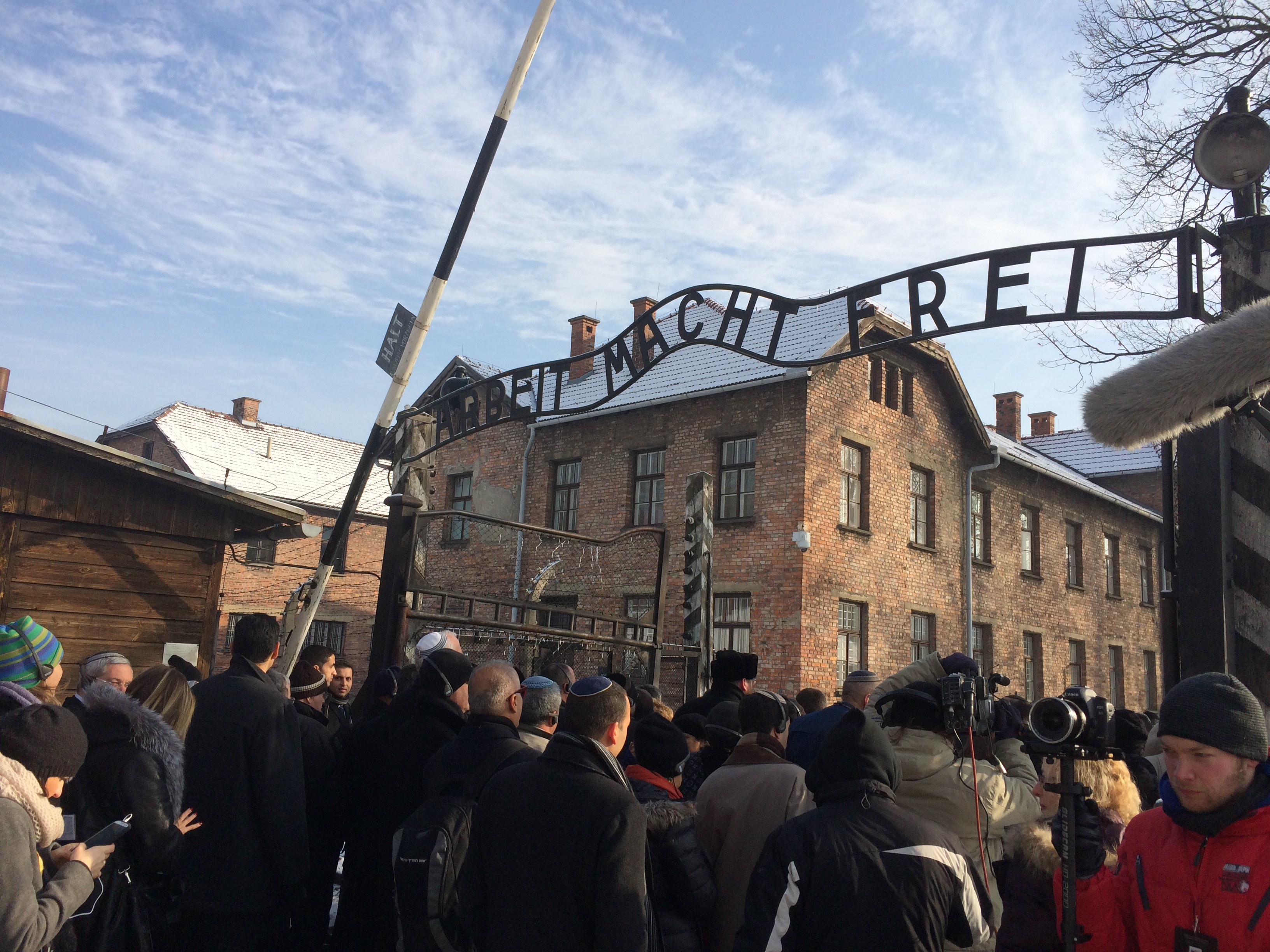
The Knesset delegation enters Auschwitz, under the “Work Will Make You Free” sign.

Image

Prisoners’ shoes

Image

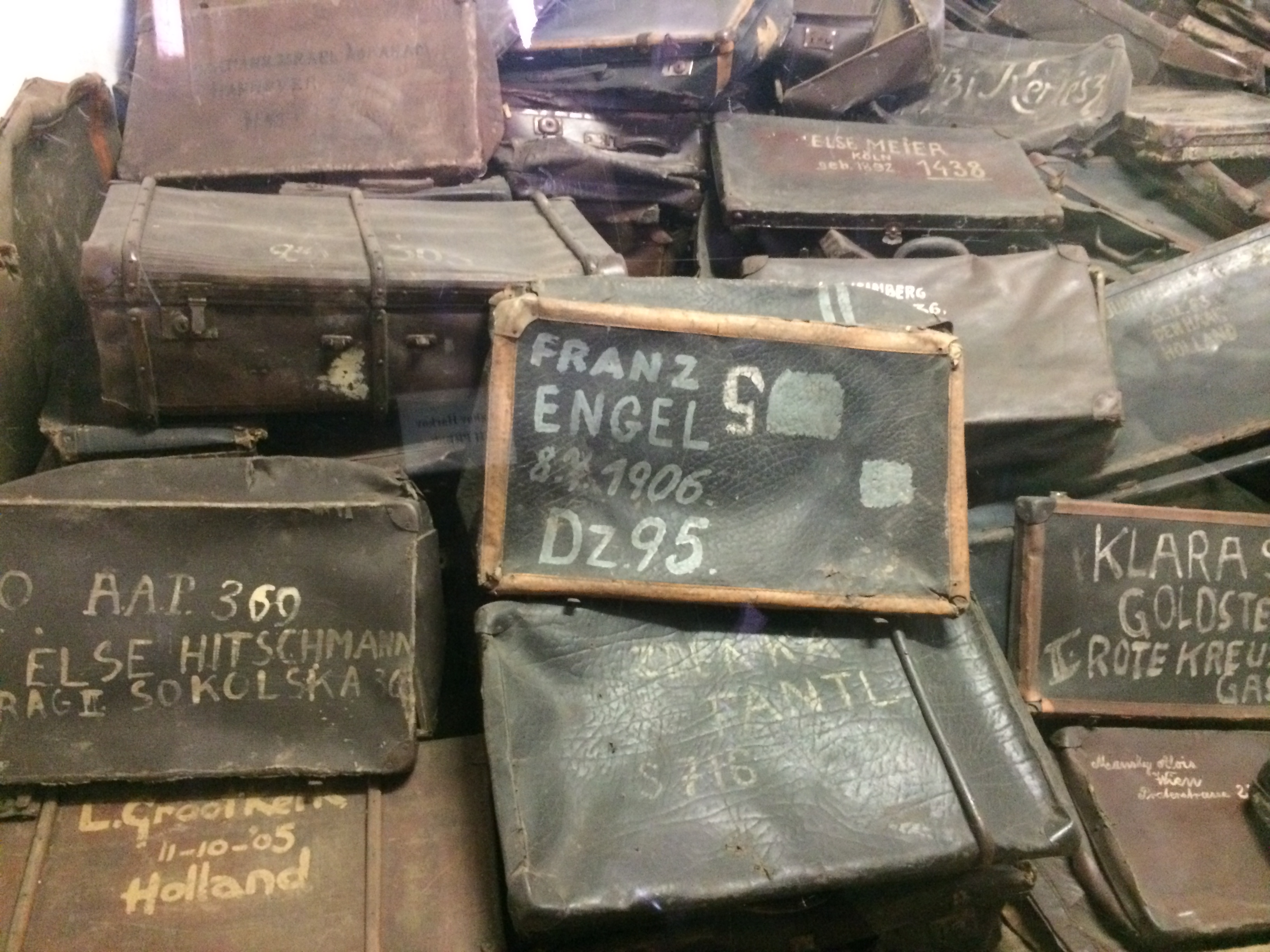
Auschwitz prisoners’ suitcases with identifying details.

Image

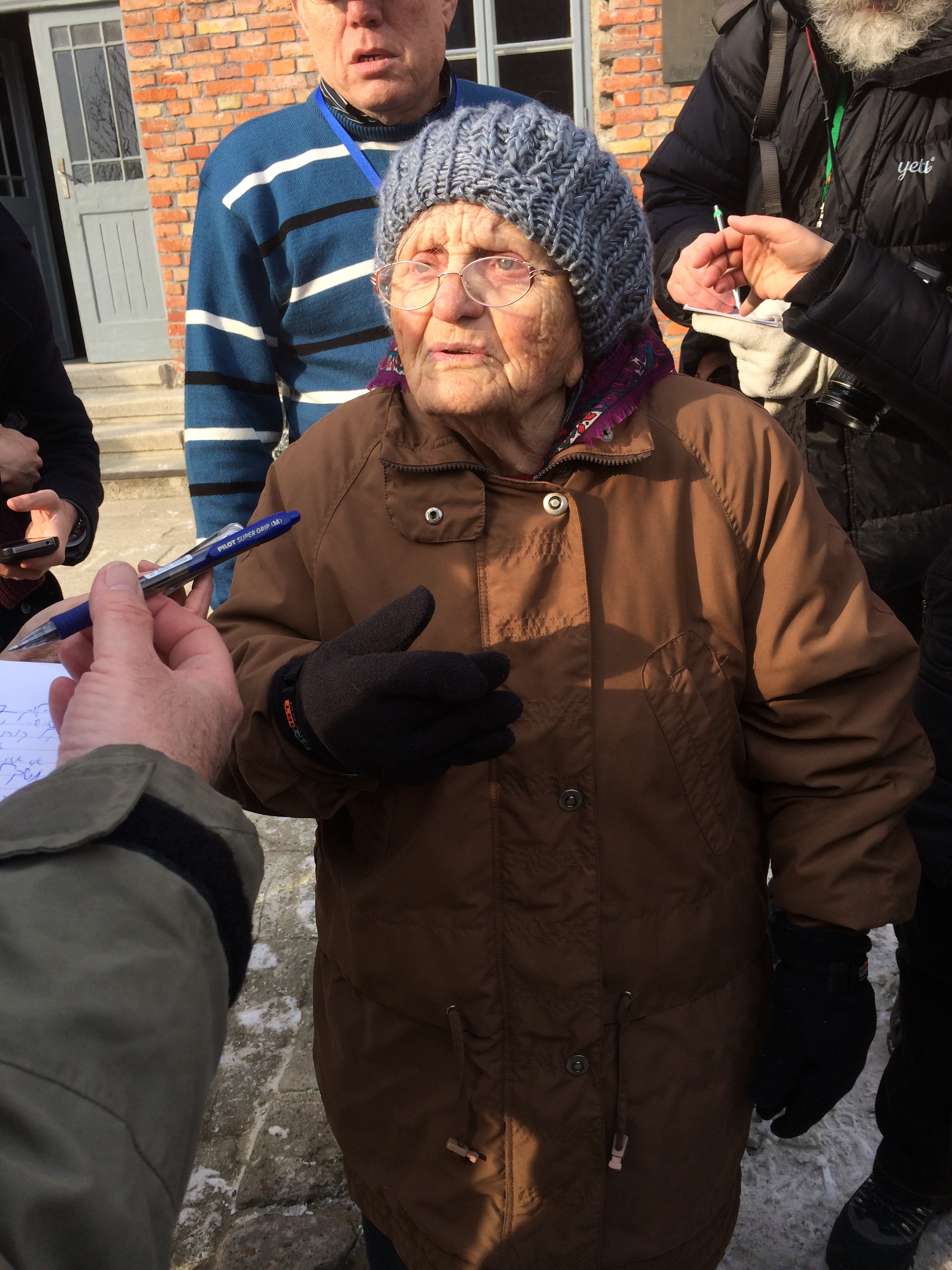
Auschwitz survivor Tzipora Dracinover: “Whoever came out of here alive – it’s a miracle. I have grandchildren. They’re all Jewish and religious. That’s our victory.”

Image

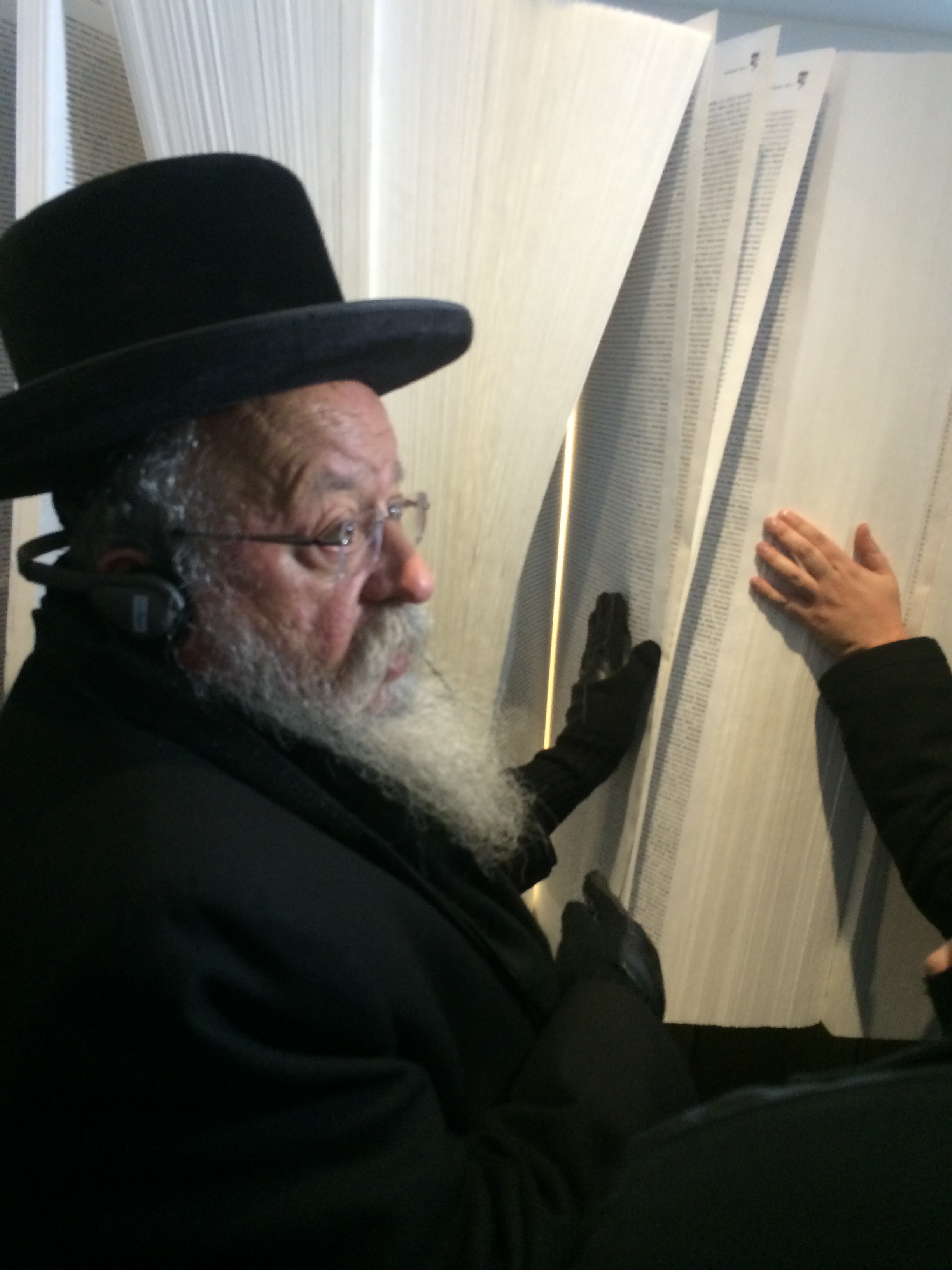
MK Menachem Eliezer Moses (UTJ) finds his relatives in the giant book of names in Yad Vashem’s building in Auschwitz.