Douglas Murray: Israel has a healthier attitude towards nationalism than Europe
Murray has given several talks in Israel this week on immigration, the subject of his hit book The Strange Death of Europe, which came out in 2017 and was released in Hebrew late last year.
The first Israeli Conservatism Conference sought to bring some of the biggest conservative intellectual names to its event in Jerusalem on Thursday. In that vein, British writer and commentator Douglas Murray spoke, along with well-known Israeli right-wing figures.
Murray has given several talks in Israel this week on immigration, the subject of his hit book The Strange Death of Europe, which came out in 2017 and was released in Hebrew late last year.
“Immigration is the major issue everywhere, and even the countries where it isn’t the number one issue, it ends up becoming one,” Murray told The Jerusalem Post this week. Continue reading
Meet the new MKs
Blue and White
Likud
UAL-Balad
Union of Right-wing Parties
Yisrael Beytenu
Two more weeks until a government
Between Hamas’s onslaught on civilians of the South and this week’s Remembrance and Independence Days, the coalition talks have not moved forward, meaning Netanyahu will have to ask for an extension.
After last month’s election, Prime Minister Benjamin Netanyahu said he would form the next government as soon as possible. The implication was that he wouldn’t even need to ask President Reuven Rivlin for a two-week extension – he’d get it done in a month, because getting the coalition partners of the past four years back in his government would be easy enough.
The parties would get more or less what they had before, the coalition agreements could be mostly copied from the ones signed in 2015, and then the government would be on its way. And the Knesset – instead of waiting a month after its inauguration – could get to work in earnest: to assign members to its committees and start passing laws. Continue reading
In limbo, on the brink of war and eyeing the Eurovision
Ministers have serious strategic and moral questions on their minds, but do they have a mandate to act as an interim government?
The latest assault by Gazan terrorists on Israel came at a strange time, politically.
It’s clear that the timing was influenced by the upcoming Independence Day celebrations and, even more so, by next week’s Eurovision Song Contest in Tel Aviv, with Palestinian Islamic Jihad escalating the situation on Saturday by shooting at IDF soldiers, and explicitly threatening the international musical extravaganza.
It’s funny – in a gallows-humor type way – to recall that six months ago, political commentators were predicting that Prime Minister Benjamin Netanyahu would try to call an election for the end of May, so that he would ride high in the polls on the joy and national pride of the two big events. The way things look now, it’s lucky for him that he moved up the schedule.
In a bizarre way, the Eurovision seems to have turned into a consideration in the Security Cabinet’s deliberations as to how to respond. Continue reading
Netanyahu and the art of coalition formation
When President Reuven Rivlin officially tasked Prime Minister Benjamin Netanyahu with forming a government last week, Netanyahu said he wanted to get started as soon as possible on building a coalition with the same partners he had for the past four years.
Of course, there was an unavoidable obstacle in the way of that goal: Passover. Only the nonreligious parties were willing to start this week – meaning Yisrael Beytenu and Kulanu – so not much progress was made.
If you’ve ever done a logic puzzle involving building a seating chart, you can understand what Netanyahu is going through right now. This one can only sit in this seat, but won’t sit next to that one or the other, etc., and now Netanyahu has to find room for them all around one cabinet table.
Except that in those puzzles, the rules are solid and can’t be broken, while in coalition negotiations the bombastic demands we’ve been hearing for the past week-plus are really opening gambits. Only the parties making modest requests will get everything they want, while the others will have to prioritize. Continue reading
The wizard of Balfour Street
Netanyahu went from ‘oy gevalt’ to celebrating a victory in just a few hours, and he’s on the way to building a solid coalition. How did he do it once again?
The mood on Tuesday evening was glum at the “Drive-In,” as the Heichal Shlomo Arena in north Tel Aviv is known, where the Likud’s end-of-elections event was held. Activists weren’t allowed in to cheer and wave their flags, and it was just hundreds of members of the local and foreign media with their cameras set up around the perimeter of the room, competing for the attention of a couple dozen Likud candidates.
The ministers, MKs and campaign officials walking from news crew to news crew expressed concern about low turnout and right-wing parties dropping below the threshold, hurting chances for a coalition. Continue reading
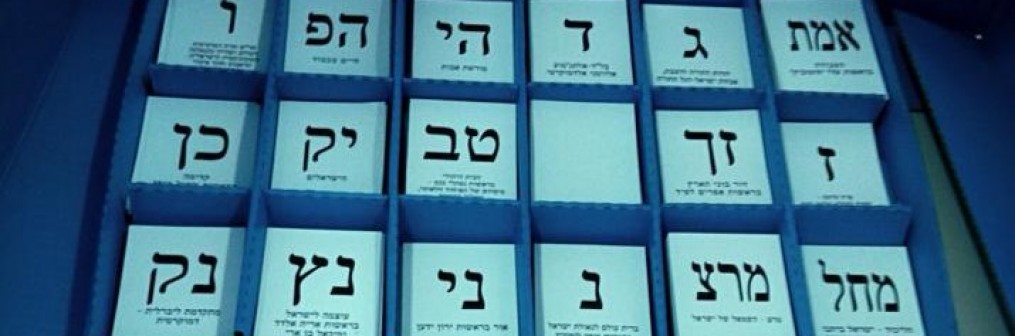
Israeli democracy is alive and kicking
Our transitions of power have been always been peaceful, and there’s a chance we will see that happen again this week.
Regardless of the results, which remained unclear Tuesday night, Election Day is, first and foremost, a celebration of democracy and Israelis should be proud of the way we conduct ourselves on this day.
Israel is the world’s 10th-oldest democracy, with universal suffrage from the time of its establishment for all citizens regardless of gender, ethnicity, religion or anything other than Israeli citizenship and being 18 years old or more. Our democratic tradition goes even farther back than that, with the Yishuv’s Assembly of Representatives during the time of the British Mandate and the Zionist Congresses that preceded it. Continue reading
Netanyahu shouts ‘gevalt’ – but will it work again?
The last election ended with 30 seats for the Likud, and the second-largest party, Zionist Union, trailing far behind with 24.
The past few days, we’ve seen the return of Prime Minister Benjamin Netanyahu’s famous “gevalt campaign” from 2015, named for the Yiddish expression of alarm, often paired with the interjection “oy!”
Netanyahu spent the last week of the previous election campaign giving interview after interview and warning that the right-wing government was in danger if people didn’t vote for the Likud. Sound familiar? It’s exactly what he’s been saying the past few days, as well. Continue reading