The coalition crisis isn’t over – it’s just postponed

During the last few weeks’ political turmoil, a lot of sports metaphors were thrown around. The ball was in this one’s or that one’s court to end the coalition crisis. And now that an election wasn’t called this week, the headlines would have you believe that the proverbial ball disappeared.

Actually, the ball has just rolled a little farther away.

Haredi conscription has been an intractable political issue for so long that it’s hard to believe that it was really resolved last night.

And it wasn’t.

Continue reading

Exclusive: How a Soros-funded NGO lobbied one EU country against another

The head of an organization funded by George Soros described how the group used its influence on one government to pressure another country for the benefit of the Hungarian-American billionaire.

The Civil Liberties Union for Europe is headed by Balázs Dénes, the group’s Berlin-based executive director. The organization was spun off from Soros’s Open Society Foundation in January 2017.

In recordings of a meeting in Amsterdam in January – between Dénes and someone he thought was a supporter – Dénes talked about his organization’s work to pressure Hungary to overturn a law limiting foreign funding for NGOs that was an attempt to rein in Soros’s activities in the country. The European Commission has said the law goes against the values of the European Union.

Dénes’s remarks show a focused effort by his organization to influence Hungarian law by leveraging German influence against the country. He detailed attempts to convince Germany to put heavy economic pressure on Budapest to abrogate the NGO law, because German companies have invested heavily and are major employers in Hungary.

Continue reading

Superman’s dream to visit Israel comes true

Dean Cain met with Prime Minister Netanyahu Tuesday and is scheduled to visit the Knesset during his trip.

Look! Up in the sky! It’s a bird! It’s a plane! No, it’s actor Dean Cain of Superman fame.

Cain, the star of Lois and Clark: The New Adventures of Superman, which ran on American TV from 1993-1997, spoke exclusively to The Jerusalem Post shortly after arriving in Israel on Tuesday about his plans for the trip.

“I have dreamed about coming to Israel for as long as I can remember,” he said. “I always wanted to be here… I love history. There are few places on earth that have as much historical value.”

Continue reading

How we got here: A timeline of the haredi conscription crisis

Will it stick, or will there be more items on this timeline? That remains to be seen.

September 12, 2017: The High Court of Justice strikes down the government’s policy exempting ultra-Orthodox yeshiva students from military service, saying it’s discriminatory, and gives the government one year to come up with a new policy.

February 1, 2018: Shas and United Torah Judaism lawmakers, as well as Bayit Yehudi MK Bezalel Smotrich, draft a bill titled “Basic Law: Torah Learning,” meant to establish study of Jewish texts as a basic value in Israel. The idea is that if Torah study is as important a value as Israel’s security, one cannot be legally favored over the other. Sources in the parties say they would condition their vote for the 2019 state budget on the bill passing as law, which means a six-week time frame.

February 15: Defense Minister Avigdor Liberman sets up a panel in his ministry to draft a haredi enlistment bill “without political intervention.” The committee includes a representative of the IDF Rabbinate.

February 22: The Council of Torah Sages of Agudat Yisrael, one of the parties in the UTJ, reinforced the faction’s budget ultimatum by saying its MKs must not vote on the budget unless the enlistment bill passes an early vote.

February 26
: The breaking point: Shas and UTJ put “Basic Law: Torah Learning” on the week’s legislative agenda. MK Robert Ilatov, chairman of Liberman’s Yisrael Beytenu faction, demands that the coalition remove the bill. He says that if it goes to a vote, the party will vote against it. Finance Minister Moshe Kahlon of Kulanu also says he’s not enthusiastic and would prefer the Defense Ministry’s version.

Lessons of elections past

The election that looks most similar to the potential one within the coming months is the election of 2013.

With an early election seemingly nearer than ever, Prime Minister Benjamin Netanyahu should probably look back at the three other times this happened to him to see what worked and what didn’t.

In 1999, 2012 and 2014, Netanyahu called for elections as prime minister – with mixed results. Likewise, a 1993 election, in which he did not run for prime minister, may nonetheless also hold important lessons for him.

Continue reading

Analysis: Knesset in limbo for session’s final week

Absentee MKs seem to have forgotten that no one really knows how this coalition crisis will end.

Two bills ran into trouble this week because there weren’t enough MKs around to vote for them. Not because there were disagreements in the coalition about the legislation. Not for any particular reason. People just weren’t around.

One would make it tougher for convicted terrorists to run for seats in the Knesset, an amendment to a Basic Law that needed 60 votes, and there weren’t that many coalition members in the building.

The other is about lowering the age of automatic child custody for divorced moms, which passed with 33 in favor. But MKs raised questions of the vote’s validity, because legislation that costs enough to be a budgetary item needs at least 50 yes votes.
Having too many MKs absent is not an unprecedented event, but it’s very unusual for the end of a Knesset session, when the legislature “cleans the table” and tries to pass as many bills as possible. It’s even more unusual in this case when the coalition is theoretically trying to pass the 2019 budget, so it really needed to get everything else done this week to make time for the long, intensive budget votes next week, which is the winter session’s last.

But the Knesset didn’t have the hustle and bustle of the end of a session. The MK cafeteria wasn’t packed with lawmakers talking to activists and journalists, making sure to glance at the screens on the wall showing the Knesset Channel to make sure they get back into the plenum across the hall in time to vote.

Instead, the atmosphere this week was one of uncertainty. The cafeteria was relatively empty, and so were the halls. Quite a few of the MKs had to be thinking that they might be out of a job soon, and started thinking about putting together a primary campaign staff, or if they’re in a party without a primary, hoping for mercy from its leader.

Freshmen lawmakers asked journalists if they thought there would be an election, while the veterans – at least those who aren’t directly involved in the coalition crisis – shared their theories about what’s really happening.

Meanwhile, the Knesset is in limbo.
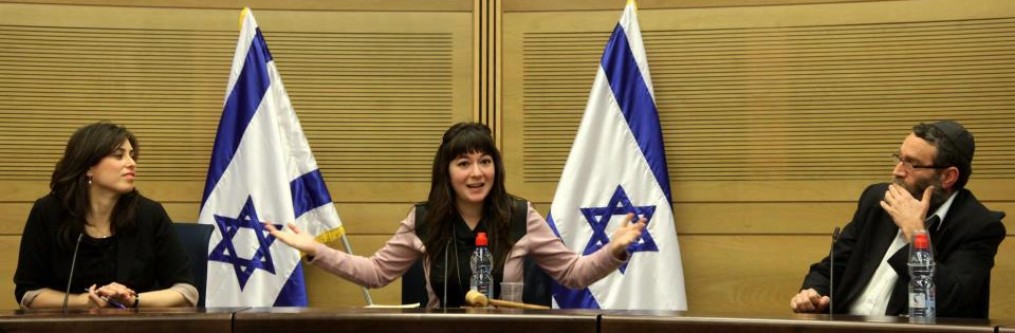
Healing a 70-year-old wound: On the disappearance of Yemenite children

The Knesset’s Special Committee on the Disappearance of Yemenite and Balkan Children has reunited three families, and urges adopted Jewish children outside of Israel to make contact

The “Yemenite Children’s Affair,” the disappearance of babies and toddlers from Yemeni and other immigrant families in the early years of the state, has been an open wound for many Israelis for the past 70 years. Families were told their child died, in many cases without seeing the body or a place of burial and without receiving a death certificate, and some came to believe the children were, in fact, kidnapped and adopted by Ashkenazi families.

After government inquiries in 1967, 1988 and 1995, the government concluded that there was no illicit adoption plot, and in the majority of cases children really did die, though some were victims of gross medical negligence, and bureaucratic abuses – such as having children buried before parents were informed – were rampant. Still, many questions remain, and Likud MK Nurit Koren has been on the case since she entered the Knesset in 201

Continue reading

The real trouble with the coalition isn’t the Netanyahu probes

th the constant news relating to alleged corruption offenses by Prime Minister Benjamin Netanyahu, many observers have been looking to his coalition partners and wondering if – and in some cases, hoping – they’ll pull out and trigger an election.

So far, that hasn’t happened. In fact, the reaction has been the total opposite.

From Kulanu to Shas, Bayit Yehudi to United Torah Judaism, all of the government parties and their leaders are standing behind Netanyahu and waiting for legal authorities to have their say rather than call an election when it’s unclear if the prime minister will even be indicted. Plus, the latest polls show that the Knesset’s makeup wouldn’t be significantly different if an election were held now.

But that doesn’t mean that all is quiet on the coalition front.

While much of the political sphere was focused on the Bezeq affair and subsequent text-messaging-judge affair, a coalition crisis was bubbling under the surface.

Once again, religion and state issues and demands from ultra-Orthodox parties Shas and UTJ are putting them at loggerheads with Yisrael Beytenu and bringing the coalition to the brink of a breakdown.

Continue reading

Netanyahu corruption drama casts a shadow of uncertainty on a busy Knesset

If – and it’s a big if – there’s an election soon, the coalition will want to have at least some recent accomplishments to bring to the voters, or at least to show they really tried.

The breakneck speed at which the news cycle moved this week – with one new scandal following another and two close confidants of Prime Minister Benjamin Netanyahu spending night after night in jail – distracted many at the Knesset from their own busy agendas.

But while MKs were nervously wondering if their days are numbered, they had too much legislative work to do to devote much attention to the prospect of facing a primary campaign they may or may not have to launch in the coming months.

After all, there are three weeks left to the Knesset winter session and a long list of things politicians have promised the public that they’d accomplish before the Passover recess.

If – and it’s a big if – there’s an election soon, the coalition will want to have at least some recent accomplishments to bring to the voters, or at least to show they really tried. They may be distracted by all the developments in the Netanyahu-related corruption allegations, but as the Mishna says, “You are not required to complete task, but you’re not free to desist from it.”

Continue reading

Knesset talking about 2019 to survive in 2018

“We are standing before an earthquake… We don’t know where things are going, but it’s clear that Israel after the recommendations cannot behave the way Israel did before the recommendations.”

When news outlets began reporting on Tuesday that the police will recommend to indict Prime Minister Benjamin Netanyahu for bribery, the Knesset was busy debating the 2019 state budget.

One opposition MK after the other wondered – in light of the impending recommendations – why they were still going through the motions of talking about 2019 when 2018 had just started and it seemed uncertain that the current Knesset would make it through the year. Continue reading